



In a recent post, Silvia of blog D for Design discussed different examples of sustainable and biophilic design and how they challenge what we think we knew about bringing a space to life.
The first example is raw wool from designer Lottozero’s Robotuft project.
“Coming from the meat and milk industries, raw sheep wool has never had textile applications so far because it was considered too coarse,” Silvia explained. “The Robotuft project proves an alternative and less wasteful route, transforming wool byproducts into tufted carpets for interiors.
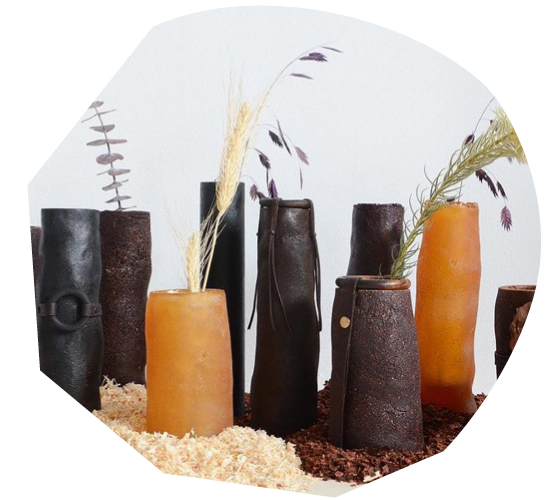
Other examples like Studio Sarmite’s vases made from pine cutting leftovers, function as a form of sustainable and biophilic design. Byproducts of the timber industry like resin, bark and cellulose have a “glass-like consistency” once combined.
Discover other examples of sustainable and biophilic design on the D for Design post here.


